Boosting Supply Chain Performance with Unified Data
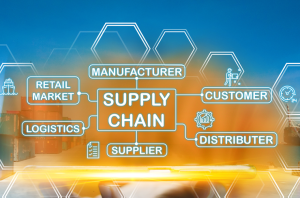 In today’s global economy, supply chains generate enormous volumes of data across procurement, production, logistics, distribution, and customer fulfillment. Yet for many organizations, the real challenge is not a lack of data — it is the inability to connect, trust, and act on that data in time to improve performance.
Research consistently shows that companies that effectively leverage integrated supply chain data outperform peers in cost efficiency, service levels, and resilience.
For example, McKinsey & Company reports that organizations that implement end-to-end supply chain visibility initiatives can reduce logistics costs by up to 15%, reduce inventory levels by 20–30%, and increase service levels by 5–10% (McKinsey, Supply Chain 4.0 — the next-generation digital supply chain). Achieving these gains increasingly depends on adopting a unified data architecture — often described as a modern data hub — that enables timely, reliable insight across the supply chain.
The Challenge of Fragmented Data
Supply chain leaders have long recognized the operational challenges created by disconnected data environments. Information related to inventory levels, supplier performance, production schedules, and customer demand often resides across multiple enterprise applications that were never designed to work together analytically.
Research from Deloitte consistently shows that lack of end-to-end visibility and data integration remains one of the most significant barriers to supply chain transformation. When organizations rely on siloed reporting structures, decision cycles slow and performance risks multiply.
These risks manifest in measurable ways:
-
Excess working capital tied up in slow-moving inventory
-
Increased backorder rates and missed service commitments
-
Reactive production planning driven by outdated information
-
Margin erosion caused by expedited transportation and last-minute sourcing
According to industry benchmarks from APQC, organizations with fragmented supply chain data environments tend to experience higher inventory carrying costs and longer order-to-cash cycles than peers with integrated analytics capabilities.
Perhaps most importantly, fragmented data environments force analysts and planners to spend significant time reconciling conflicting reports rather than focusing on performance optimization and strategic planning.
The Power of Unified Data
Unified data architectures address these challenges by integrating information from across the supply chain into a governed, consistent analytical framework. Instead of reconciling multiple versions of the truth, organizations can evaluate performance using standardized metrics, aligned master data, and timely updates.
This foundation enables more confident decision-making and supports several critical supply chain performance improvements.
Enhanced End-to-End Visibility
End-to-end visibility has become one of the most frequently cited priorities among supply chain executives — and for good reason. Insights from Gartner suggest organizations with mature supply chain visibility capabilities are significantly more effective at responding to disruptions and maintaining operational continuity.
Consider a multi-plant manufacturer managing complex supplier networks and global distribution channels. Without unified data, planners may detect material shortages only after production schedules are missed or customer orders are delayed. With integrated analytics, however, they can monitor supplier reliability, inventory buffers, and demand variability in near real time — enabling proactive interventions such as alternative sourcing, production rebalancing, or inventory redeployment.
Visibility in this context is not simply about tracking shipments or viewing dashboards. It is about creating a shared operational reality that aligns procurement, manufacturing, logistics, finance, and customer service around the same performance signals.
More Accurate Forecasting and Inventory Optimization
Forecast accuracy remains one of the most powerful levers for improving supply chain efficiency. Even modest improvements can produce meaningful financial benefits. As a matter of fact, the Institute of Business Forecasting & Planning reports that improving forecast accuracy can reduce inventory investment while increasing service levels and revenue attainment.
Unified data architectures play a critical role in enabling this improvement. By integrating historical sales patterns with promotional activity, regional demand drivers, macroeconomic indicators, and real-time order signals, organizations can generate more dynamic and context-aware demand forecasts.
This capability directly influences key performance indicators such as:
-
-
Inventory turns
-
Days of inventory on hand
-
Fill rate and OTIF performance
-
Forecast bias and mean absolute percentage error
-
Backorder percentage
-
Retail and consumer goods supply chains illustrate this impact clearly. Organizations that align point-of-sale demand signals with replenishment planning and supplier lead times can significantly reduce waste while maintaining product availability. The result is improved margin performance, reduced markdown exposure, and stronger customer loyalty.
A Strategic Imperative for Modern Supply Chains
As supply networks become more global and interconnected, the ability to integrate and interpret data across operational boundaries is becoming a core competitive capability.
Research from PwC shows digitally mature supply chains can achieve higher revenue growth and improved profitability compared with less mature peers (PwC Digital Supply Chain Survey). These gains stem not only from cost reduction but also from improved responsiveness, better customer experience, and stronger strategic planning.
Organizations that invest in unified data architectures position themselves to move beyond reactive supply chain management toward predictive and prescriptive decision-making. They can simulate alternative scenarios, evaluate trade-offs between service and cost, and coordinate actions across functional silos. And in an environment defined by disruption and opportunity, this ability to act on integrated supply chain insight is increasingly the difference between operational leaders and laggards.
How Silvon Helps Supply Chain-Centric Businesses
Silvon’s Stratum™ data management and analytics platform is designed to help manufacturers and distributors overcome the data fragmentation challenges that often limit supply chain insight.
Stratum harmonizes and normalizes data from ERP systems, supply chain applications, spreadsheets, and external sources into a unified analytical environment. Without replacing existing systems, it serves as connective tissue across the enterprise — enabling stakeholders to evaluate performance using consistent metrics and shared business definitions.
By supporting both descriptive and predictive analysis, Stratum helps organizations understand what is happening across their supply chains and anticipate what is likely to happen next. This enables faster, more coordinated responses to risk and opportunity — driving improved service levels, optimized inventory investment, and more confident decision-making.
The result is a single operational reality powered by unified information.
For more details, visit www.silvon.com